Watercolor AI Art Prompts: Paper Texture, Washes, and Soft Edges
Write watercolor AI prompts with transparent washes, textured paper, and restrained detail. Includes landscapes, flowers, and cozy scenes.
 Sumit Singh RathoreUpdated 3 min read
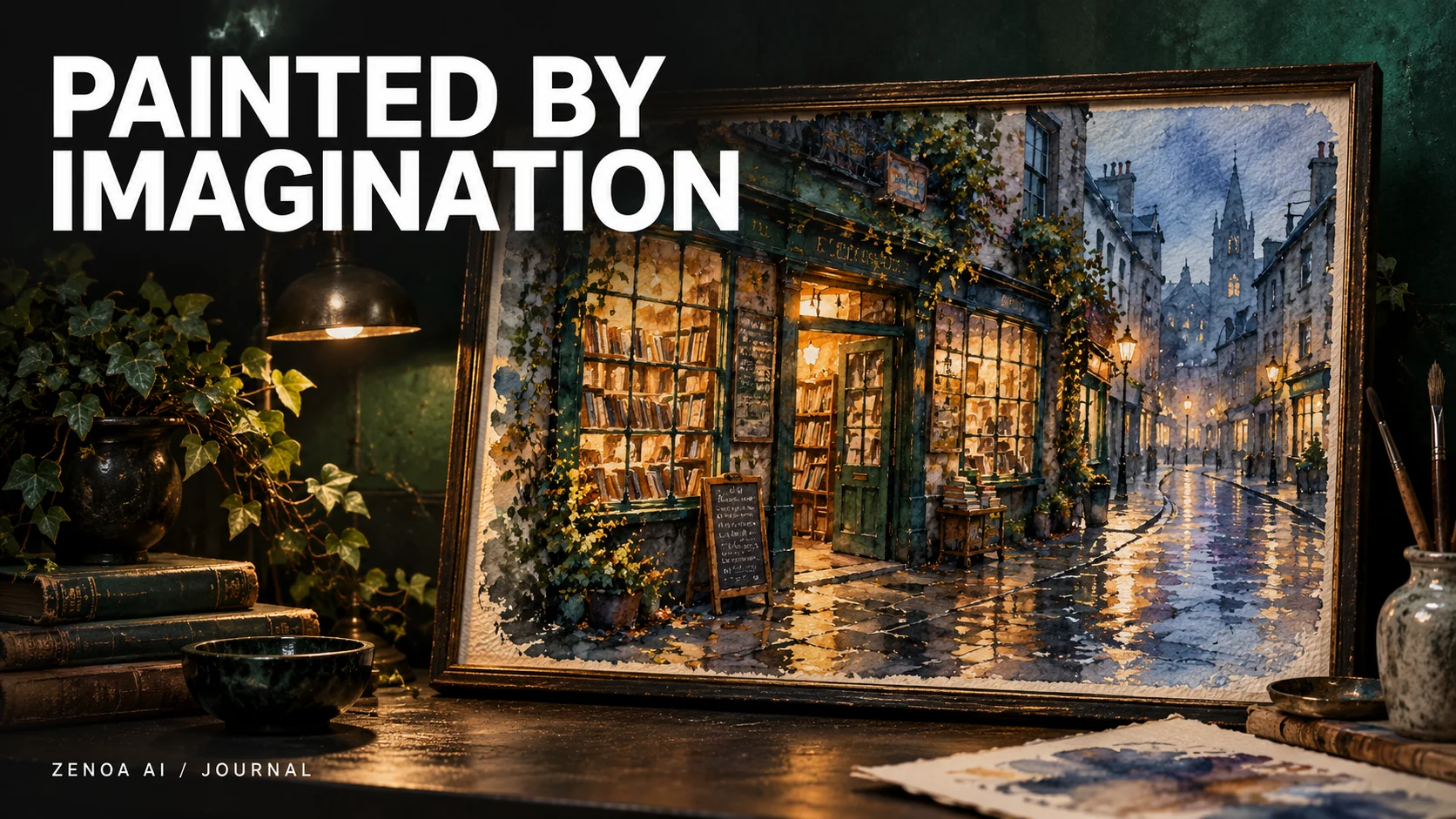
For watercolor-style AI art, describe transparent washes, visible paper texture, a limited palette, and a mix of soft and defined edges. Choose a simple subject and leave some areas lightly described. Asking for sharp detail everywhere can undermine the loose painted look you want.

What makes a generated image feel like watercolor?
Useful visual cues include pale overlapping color, uneven pigment, soft blooms at the edges, and untouched-looking paper. These are appearances the generator can imitate; the image is still digitally generated rather than a scanned physical painting.
Use material descriptions instead of relying on a particular artist's name. “Transparent indigo washes on textured cream paper” communicates both medium and palette while giving you words you can refine later.
A reusable watercolor prompt
[subject and setting], transparent watercolor washes, textured paper, [two or three main colors], soft edges in the background, selective detail on the focal point, generous unpainted space
For example:
A small coastal cottage beside a winding path, transparent watercolor washes on textured cream paper, sage green and muted blue with warm ochre accents, loose sky, selective detail on the doorway, quiet spacious composition
Keep the medium consistent with the style option you choose in your generator. If the result looks like glossy plastic, remove terms associated with polished 3D rendering and restate the surface and edge treatment.
Three scenes to explore
Rainy bookstore
A tiny old-town bookstore on a rainy evening, warm light in the window, indigo and amber watercolor washes, textured paper, soft reflections, loose distant buildings, detailed doorway
Garden study
Three simple wildflowers in a ceramic cup, transparent rose and olive watercolor, broad pale background washes, visible paper grain, delicate stems, quiet composition
Mountain morning
A mountain lake at dawn, mist between distant peaks, muted blue and lavender washes, soft feathered edges, pale paper sky, small dark pine silhouettes in the foreground
The decorative cover is a generated illustration of this visual direction. Do not expect a prompt copied into another model to recreate it exactly.
How to refine an overly busy watercolor image
| Symptom | Try this change |
|---|---|
| Every leaf is sharply outlined | Ask for loose foliage masses and selective detail |
| Colors look heavy or muddy | Reduce the palette and request lighter transparent washes |
| Background competes with the subject | Ask for a pale loose background and a defined focal point |
| Texture overwhelms the scene | Request subtle paper grain instead of heavy texture |
Change one phrase at a time. A softer image may suit a journal page but fail as a tiny avatar, so judge the result against its destination. Our style-selection guide compares those trade-offs.
Finish for the intended use
Keep the original download and add any title in an editor. Inspect pale edges against both light and dark backgrounds; a cream paper rectangle is part of the image unless you deliberately remove it. For a cohesive set, reuse the same paper description, palette and amount of detail across each prompt.
Frequently asked questions
Which words help create watercolor-style AI art?
Try transparent washes, textured paper, soft edges, subtle pigment blooms and selective detail. Combine them with a clear subject and a limited palette.
Is a watercolor-style AI image a real watercolor painting?
It is a digitally generated image that imitates watercolor characteristics. Describe it as watercolor-style AI art rather than a physical painting.
Why does my watercolor prompt look too detailed?
The prompt or style may be emphasizing sharpness and dense detail. Request loose background shapes and reserve defined edges for the focal point.